Simulation training puts health care students into lifelike clinical situations before they ever work with a patient. At ABES College that means task trainers, full-body mannequins and virtual scenarios run by an instructor, each one followed by a debrief on what went well and what to do differently next time.
This guide covers what simulation training is and why health care schools use it, how it works inside the health care aide program and the pharmacy assistant program at ABES College, and where a career in simulation education can eventually lead.
Simulation training has become an integral part of healthcare education, revolutionizing the way future professionals prepare for real-world scenarios. At ABES, the focus on simulation training equips students with practical skills and confidence, ensuring they are ready to excel in their healthcare careers.
In this post, we’ll go over the following key benefits of simulation training in detail:
• Realistic Clinical Scenarios: Advanced technology bridges theory and practice.
• Confidence Building: Safe environments for hands-on practice and feedback.
• Teamwork and Communication: Collaborative simulations enhance skills.
• Patient Safety: Risk-free training improves safety and outcomes.
• Tech-Forward Learning: Stay updated with the latest healthcare innovations.
• Proven Impact: Effective training backed by studies and real-world success.
The Role of Simulation Training in Healthcare
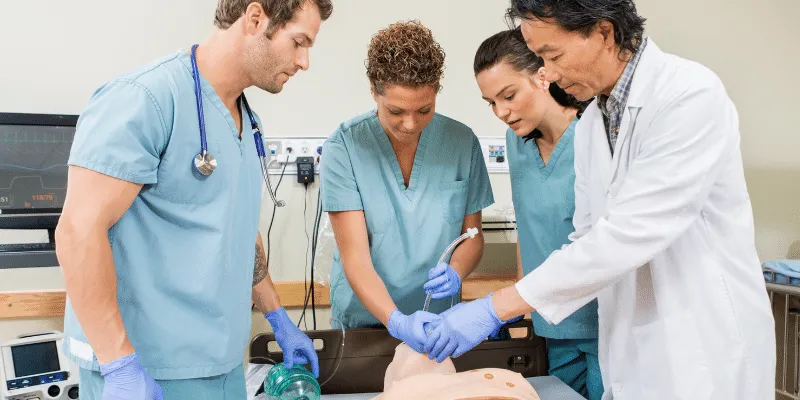
Simulation training in healthcare uses advanced technology to create realistic clinical scenarios. These simulations range from simple task trainers, such as intravenous (IV) insertion arms, to complex full-body mannequins that can mimic a wide array of medical conditions. Virtual reality (VR) and augmented reality (AR) are also increasingly utilized, providing immersive environments for students to practice in. This hands-on approach bridges the gap between theoretical knowledge and practical application, making it a cornerstone of modern healthcare education.
Developing Clinical Skills through Simulation
One of the primary benefits of simulation training is the enhancement of clinical skills. Students can practice procedures repeatedly until they achieve proficiency without the risk of harming actual patients. This repetitive practice is crucial for mastering complex tasks, such as catheterization, sterile processing, or administering injections. Through simulation, students gain muscle memory and develop a deeper understanding of the techniques, which translates into better performance in real clinical settings.
Exposure to Diverse Scenarios
Additionally, simulation training allows new students to encounter a diverse range of real-life scenarios they might not frequently see during traditional practicum rotations. By exposing students to rare but critical conditions, simulation ensures they are well-prepared to handle any situation they may encounter in their professional healthcare careers.
Building Confidence in Healthcare Students
Entering the healthcare field can be daunting, especially for those who are new to patient care. Simulation education helps build confidence by allowing students to familiarize themselves with the clinical environment and patient interactions in a controlled, supportive setting. By practicing various scenarios, students can identify and address their weaknesses, reducing anxiety and improving their overall competence. This increased confidence is essential when transitioning from the classroom to the clinical setting.
Supportive Feedback Mechanism
The supportive feedback mechanism inherent in simulation training helps students to refine their skills continually. Constructive criticism and guidance from trained facilitators and content experts enable learners to pinpoint their areas of improvement, fostering a growth mindset that is crucial for long-term professional development.
Developing Critical Thinking and Decision-Making Skills
Healthcare professionals often face high-pressure situations that require quick, decisive action. Simulation training is designed to develop critical thinking and decision-making skills. Students are presented with realistic scenarios where they must assess the situation, prioritize tasks, and implement appropriate interventions. This process hones their ability to think on their feet, make sound judgments, and adapt to unexpected challenges, skills that are invaluable in real-life situations.
Targeted Training for Specific Conditions
Simulated circumstances can be tailored to mimic specific conditions, such as cardiac arrest or a patient in palliative care, giving students a comprehensive understanding of various healthcare protocols. This targeted training ensures that students are not only ready to perform under pressure but also capable of delivering high-quality care in the most demanding circumstances.
Promoting Teamwork and Communication in Healthcare
Effective healthcare delivery relies heavily on teamwork and communication. Simulation training emphasizes these aspects by incorporating scenarios that require collaboration among students. These scenarios often mimic real-world situations where a variety of healthcare professionals must work together to achieve the best patient outcomes.
Collaboration in Simulated Environments
By practicing these interactions in a simulated environment, students learn the importance of clear communication, active listening, and coordinated effort. This collaborative training prepares them for the interdisciplinary nature of modern healthcare.
Debriefing Sessions for Continuous Improvement
Simulation training includes debriefing sessions where teams can reflect on their performance, discuss what went well, and identify areas for improvement. These sessions are invaluable for fostering a culture of continuous improvement and mutual respect among team members.
Enhancing Patient Safety through Simulation Training
Patient safety is a paramount concern in healthcare. Simulation training plays a crucial role in enhancing patient safety by allowing students to practice and refine their skills in a risk-free environment. By identifying and correcting errors during simulations, students can learn from their mistakes without compromising patient well-being. This focus on error reduction and prevention leads to safer clinical practices and better patient outcomes.
Incorporating Safety Protocols in Training
Healthcare simulation training can include the use of checklists and other safety protocols that are critical in real-world healthcare settings. By ingraining these practices early in their education, students develop a solid foundation in patient safety that will benefit them throughout their healthcare careers.
Bridging the Gap Between Theory and Practice
Traditional classroom education provides the theoretical foundation necessary for healthcare practice. However, bridging the gap between theory and practice can be challenging. Simulation training serves as a vital bridge, allowing students to apply theoretical knowledge in practical scenarios. This experiential learning reinforces classroom instruction and deepens understanding, making it easier for students to recall and apply what they have learned when faced with real-world situations.
Encouraging Safe Learning and Skill Development
Mistakes are an inevitable part of the learning process, but in healthcare, errors can have profound consequences. Simulation training provides a safe space for students to learn and make mistakes without fear of harming patients. This environment encourages experimentation and exploration, allowing students to test their limits and expand their skills.
Continuous Learning Through Constructive Feedback
The constructive feedback received during the debriefing part of simulations helps them grow and improve, fostering a culture of continuous learning and development. Furthermore, this safety net promotes a mindset where students are not afraid to ask questions and seek help when needed, which is crucial for their professional growth and the overall improvement of healthcare practices.
Preparing Students with Variety
As mentioned above, simulation training often includes a wide range of scenarios, from common procedures to rare and complex cases. This variety ensures that students are well-rounded in their clinical skills and prepared to handle a broad spectrum of patient needs.
Staying Ahead of Technological Advancements
The healthcare industry is constantly evolving, with innovative technologies and treatment methods emerging regularly. Simulation training helps students stay abreast of these advancements by providing opportunities to work with modern tools and equipment. For instance, VR and AR simulations can replicate the latest surgical techniques or diagnostic procedures, giving students a glimpse into the future of healthcare.
Preparing Graduates for the Future of Healthcare
This exposure to state-of-the-art technologies ensures that graduates are well-prepared to embrace and adapt to innovations in their field. Moreover, by becoming proficient with these advanced technologies during their training, students can become leaders in implementing and utilizing new tools in their future workplaces, driving progress and improvement in healthcare delivery.
Lifelong Learning and Professional Development
Healthcare is a field that demands continuous education and skill development. Simulation training is not limited to students; it is also an invaluable resource for practicing professionals seeking to update their skills or learn new techniques. By participating in simulation exercises, healthcare workers can maintain their proficiency and stay current with industry standards. This commitment to lifelong learning is essential for providing high-quality care and advancing one’s career.
Adapting to Changes in Healthcare Regulations
Additionally, ongoing simulation training can help professionals adapt to changes in healthcare regulations and standards, ensuring they remain competent and compliant in their practice.
Real-World Impact of Simulation Training
Numerous studies and real-world examples highlight the effectiveness of simulation training in healthcare. For instance, a study published in the Journal of the American Medical Association (JAMA) found that simulation-based training significantly improved the performance of surgical residents. Similarly, the University of Toronto’s Centre for Simulation Studies reported a marked reduction in medical errors among nurses who underwent regular simulation training.
Success Stories from Healthcare Professionals
These success stories underscore the transformative impact of simulation on healthcare education and practice. Additionally, testimonials from healthcare professionals who have benefited from simulation training provide compelling evidence of its value. These stories highlight how simulation training has not only enhanced their skills but also increased their confidence and improved patient outcomes.
ABES College and Simulation Training
At ABES, simulation training is becoming an integral part of the curriculum. State-of-the-art simulation labs equipped with high-fidelity mannequins and other advanced tools provide students with a comprehensive learning experience.
The faculty, comprising experienced healthcare professionals, guides students through simulated scenarios, offering personalized feedback and support. This hands-on training, combined with ABES’s strong emphasis on theoretical knowledge, ensures that graduates are well-prepared to excel in their chosen fields.
Furthermore, ABES continuously updates its simulation programs to reflect the latest advancements in healthcare, ensuring that students receive the most current and relevant training possible.
Start Your Healthcare Career with Simulation Training at ABES
Simulation training at ABES equips you with the skills, confidence, and experience needed for a successful healthcare career. By bridging theory and practice and embracing the latest technology, you’ll be ready to meet the challenges of the healthcare industry. Prepare for your future: enroll at ABES today!

Rebecca Cicero
Simulation Coordinator
Rebecca Cicero is a seasoned professional with a passion for the dynamic realm of healthcare simulation. With 15 years of dedicated experience in the field, Rebecca’s commitment to excellence is showcased by her CHSOS certification, a testament to her expertise in health simulation. Known for thriving in fast-paced environments, Rebecca excels at orchestrating intricate simulation scenarios with precision and innovation.
Her journey in the health simulation field has been marked by a genuine love for both the simulation process and the students she guides. Rebecca finds joy in witnessing the transformative power of simulation as a tool for learning and skill development. Beyond her technical proficiency, Rebecca is recognized for her creative approach to simulation, infusing scenarios with imagination to enhance the learning experience.
Her dedication to advancing healthcare education through simulation has not only made her a respected professional in the industry but also a mentor who takes pride in nurturing the growth of future healthcare professionals.
Simulation in the health care aide program
In the healthcare field, practical skills and real-world experience are invaluable. The ABES Health Care Aide Program leverages innovative simulation technology to provide students with immersive, hands-on learning experiences. Here, we discuss how simulation benefits care aide trainees by enabling them to learn in real-world environments. This innovative approach ensures that graduates are well-prepared to meet the challenges of their profession. Here are several ways simulation is used in the ABES Healthcare Aid Program to enhance education and training.
1. Realistic Clinical Scenarios
Simulation technology allows students to practice in lifelike clinical environments that mimic real-world situations. For example, students may encounter a simulated patient experiencing a heart attack, where they must quickly assess the situation and start administering CPR. By working through these simulations, students can develop their skills and gain confidence in a safe, controlled setting. For ABES students, this means being able to practice and refine their techniques before encountering actual patients, reducing anxiety, and increasing proficiency.
2. Hands-On Practice with Medical Procedures
In the ABES Health Care Aide Program, simulation allows the practice of various skills, such as helping patients with daily activities such as bathing, grooming, and dressing. For instance, students might practice assisting in simple wound care, allowing them to perfect this essential skill without the pressure of working on a real patient. This hands-on experience ensures that students are well-prepared for their clinical placements and future careers, giving them a significant advantage in the job market.
3. Development of Critical Thinking Skills
Simulation exercises are designed to challenge students’ critical thinking and problem-solving abilities. Scenarios often present unexpected complications, such as a complication with oxygen delivery, requiring quick decision-making. For future Health Care Aides, this ability to adapt and respond effectively to changing situations is crucial for providing high-quality patient care. Prospective ABES students will benefit from developing these skills early in their training, preparing them for the unpredictability of real-world healthcare settings.
4. Enhanced Communication and Teamwork
Effective communication and teamwork are vital components of healthcare. Simulation-based training at ABES often involves group exercises where students must work together to care for simulated patients. For example, a simulation might involve a multi-disciplinary team working to care for an elderly patient, requiring clear communication and coordinated efforts.
These scenarios help students develop effective communication skills and learn the importance of collaboration in a healthcare setting. For those entering the Healthcare Aid Program, this means gaining valuable experience in working as part of a team, which is essential for success in any healthcare role.
5. Safe Learning Environment
One of the biggest advantages of simulation is that it provides a safe environment for learning. Mistakes can be made without any risk to real patients, allowing students to learn from their errors and improve their performance.
For instance, if a student incorrectly feeds a patient during a simulation, they can receive immediate feedback and correct their technique without causing harm. This aspect of simulation is particularly beneficial for healthcare aide students, who can practice procedures and patient interactions repeatedly until they achieve proficiency. Prospective ABES students can feel confident knowing that their training includes many opportunities to learn and grow without the pressure of real-life consequences.
6. Immediate Feedback and Assessment
Simulation in the ABES Healthcare Aid Program includes immediate feedback from instructors, which is critical for effective learning. After each simulation exercise, students will participate in a debrief where they receive detailed evaluations of their performance, including what they did well and areas for improvement.
For example, if a student performs CPR on a mannequin, the instructor can review their technique and provide instant feedback on the depth and rate of compressions. This immediate feedback helps students to quickly identify and correct mistakes, accelerating their learning process. For students, this means a more tailored and responsive educational experience that helps them to continuously improve their skills.
7. Exposure to a Variety of Clinical Situations
Health care aides must be prepared to handle a wide range of clinical situations. Simulation training at ABES exposes students to various scenarios, from routine care to emergencies. For example, students might simulate caring for a patient with dementia, learning how to manage challenging behaviours and providing compassionate care. This diversity in training ensures that students are well-rounded and adaptable, ready to face any situation they may encounter in their careers. ABES students will appreciate the comprehensive nature of the simulation training, which prepares them for the realities of the healthcare environment.
8. Building Confidence and Competence
Through repeated practice and exposure to different clinical scenarios, simulation training helps build both confidence and competence in healthcare aide students. For example, by practicing communication skills with mannequins and standardized patients, students can perfect their technique and gain confidence in their abilities. This preparation is essential for transitioning from the classroom to clinical practice.
By the time ABES students graduate, they will have a solid foundation of skills and experience, making them valuable assets to any healthcare team. For those considering the Care Aide Program, this means entering the workforce with the confidence and competence needed to excel.
Learn Cutting-Edge Care Aid Skills at ABES
Simulation in ABES’s Health Care Aide Program provides students with a rich, immersive learning experience. For prospective students, this approach ensures that they are not only knowledgeable but also skilled, confident, and ready to make a positive impact in the healthcare field.
If you’re ready to dive into this rewarding career path, contact our team to learn more!
Simulation in the pharmacy assistant program
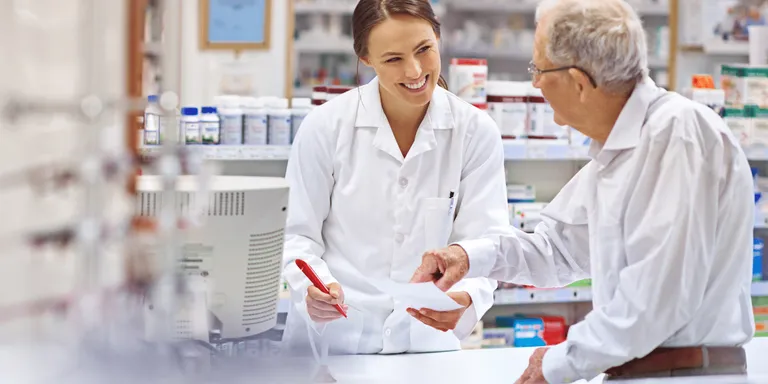
Pharmacy work demands practical skills and real-world experience for success. The ABES Pharmacy Assistant Diploma Program integrates advanced simulation technology to provide students with immersive, hands-on learning experiences. This innovative approach ensures graduates are well-prepared to meet the challenges of their profession.
Here are several ways simulation is used in a Pharmacy Assistant Diploma Program to enhance education and training.
Accurate medication dispensing
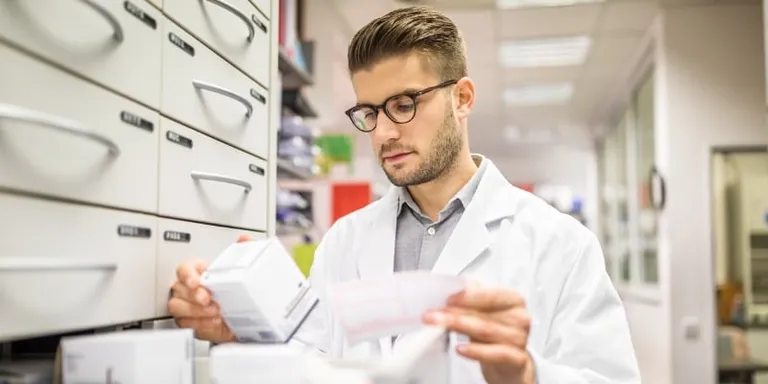
Simulation technology allows students to practice accurate medication dispensing in a controlled environment. For example, students can use a simulated pharmacy system to fill prescriptions, ensuring they understand the importance of accuracy and attention to detail. This hands-on experience helps prevent common errors such as incorrect dosages or dispensing the wrong medication. Students can feel confident that their training will prepare them to handle the responsibilities of medication dispensing safely and effectively.
Understanding drug interactions
Simulations can provide realistic scenarios where students must identify and manage drug interactions. For instance, students might work with a simulated patient who is taking multiple medications, requiring them to recognize potential interactions and provide appropriate recommendations. This training enhances their understanding of pharmacology and improves their ability to advise patients and healthcare providers. For future pharmacy assistants, this skill is critical in ensuring patient safety and effective medication management.
Developing customer service skills
Customer service is a vital aspect of the pharmacy assistant role. Simulation-based training includes scenarios where students interact with virtual patients, improving their communication and interpersonal skills. For example, students might role-play helping a customer with questions about over-the-counter medications or dealing with a dissatisfied customer. These exercises help students learn how to handle various customer interactions professionally and empathetically. New students will appreciate the emphasis on developing strong customer service skills, which are essential for success in a pharmacy setting.
Mastering inventory management
Effective inventory management is crucial in a pharmacy. Simulation allows students to practice tasks such as checking stock levels, placing orders, and managing expired medications. For instance, students might use a simulated inventory system to track medication levels and generate reports. This practical experience ensures that students understand the importance of maintaining an accurate inventory and can perform these tasks efficiently. For those entering a Pharmacy Assistant Diploma Program, mastering inventory management means being well-prepared to support the operational needs of a pharmacy.
Handling prescription refills
Prescription refills are a routine but essential part of pharmacy operations. Through simulation, students can practice the process of handling refill requests, verifying patient information, and ensuring the accuracy of the medication and dosage. For example, students might work with a simulated pharmacy database to process refill requests, learning the importance of thoroughness and accuracy. This training ensures that graduates can confidently manage prescription refills, a key responsibility for pharmacy assistants.
Responding to emergency situations
While not common, emergency situations can occur in a pharmacy setting. Simulation training may include scenarios where students must respond to emergencies, such as a patient experiencing an adverse reaction to medication. Students might then practice recognizing symptoms of anaphylaxis and administering emergency treatment. This training helps students develop the ability to stay calm and act quickly in high-pressure situations. Students will benefit from this preparedness, ensuring they can respond effectively to emergencies.
Enhancing record-keeping skills
Accurate record-keeping is essential for compliance and patient safety in a pharmacy. Simulation exercises allow students to practice maintaining patient records, documenting medication dispensing, and handling confidential information. For example, students might use a simulated electronic health record system to update patient files and track medication histories.
Therefore, students will become familiar with the importance of precise documentation and can perform these tasks accurately. For those entering a Pharmacy Assistant Diploma Program, this means being equipped to handle the critical task of record-keeping efficiently.
Learning compliance and regulatory standards
Pharmacy assistants must adhere to various compliance and regulatory standards. Simulation training includes scenarios that teach students about regulations such as HIPAA (Health Insurance Portability and Accountability Act) and proper handling of controlled substances. For instance, students might practice conducting audits to ensure compliance with regulatory requirements. This training helps students understand the legal and ethical responsibilities of their role.
Program students will appreciate the comprehensive training in compliance and regulations, which is crucial for maintaining professional standards in a pharmacy setting.
Becoming a certified healthcare simulation educator
If you’re just beginning your journey in healthcare, whether as a practical nurse, unit clerk, or healthcare aide, it’s an exciting time to think about where this path could take you. While your focus now is on learning core skills and gaining hands-on experience, there are many directions your career can grow in the future. One inspiring option is becoming a Certified Healthcare Simulation Educator (CHSE), a credential for professionals who specialize in helping others learn through simulated healthcare experiences.
Simulation educators are the people behind those realistic training labs and practice scenarios you’ll likely encounter during your education. They play a huge role in preparing future healthcare workers to succeed in fast-paced, high-stakes environments. So while CHSE might not be something you pursue right away, it’s worth knowing about now, as a goal to aspire to later in your career.
What is CHSE?
The CHSE designation is awarded by the Society for Simulation in Healthcare (SSH). It recognizes healthcare professionals who have become experts in teaching through simulation. This may include roleplay, lifelike mannequins, emergency drills, or virtual environments. These educators often guide others through tough clinical scenarios in a safe, controlled setting. For diploma students, this means the educators who run your labs may one day hold this certification.
Teaching through simulation
When you’re in school, simulation helps build your confidence and decision-making skills before you step into real patient care. CHSE-certified educators are trained to design these experiences thoughtfully, making sure they’re both realistic and effective. In the future, if you enjoy mentoring others or teaching practical skills, you might find yourself drawn to this kind of work, too.
Keeping up with the industry
Simulation education changes as healthcare technology and practices evolve. That’s why CHSE-certified educators are expected to keep learning and stay on top of new methods. Students benefit from this directly, as the training they receive reflects current standards and innovations. And one day, if you’re in a position to teach, that same spirit of lifelong learning might guide your own career.
Being part of a bigger community
CHSE educators are connected to a wide network of professionals who are passionate about simulation-based learning. They attend conferences, share ideas, and help shape how healthcare training is delivered. If you love working with people and sharing knowledge, it’s a career path that can grow well beyond the classroom.
Supporting student success
The goal of simulation is to help students like you feel ready for real-world challenges. CHSE-certified educators are skilled at creating a learning environment that supports growth, encourages questions, and helps you learn from experience. Many students find these sessions to be the most engaging, and the most helpful, in their entire program.
A future goal to work toward
CHSE isn’t something you’ll be working on as a student, but it’s a great example of where a healthcare diploma can eventually take you. After gaining experience in the field, some professionals choose to become educators, mentors, or leaders in simulation training. If you find yourself inspired by the instructors in your program, keep in mind that this kind of role could one day be part of your own career path.
Related reading
- What it is like to be a health care aide
- Pharmacy assistant career opportunities in Calgary
- Getting from health care training into a job
Talk to an advisor about training with simulation
Simulation labs run through the health care and community service programs at ABES College in Calgary. An ABES College advisor can go through entrance requirements, upcoming intakes and funding options with you.