
Practical Nursing
In-person classroom in Calgary, Mon–Fri, academic prerequisites apply
- Program length
- 80 weeks (about 18 months)
- Next start date
- Jun 30, 2027
- Credential
- Diploma
- Tuition
- $46,000
- supervised practicum hours
- 765
The training
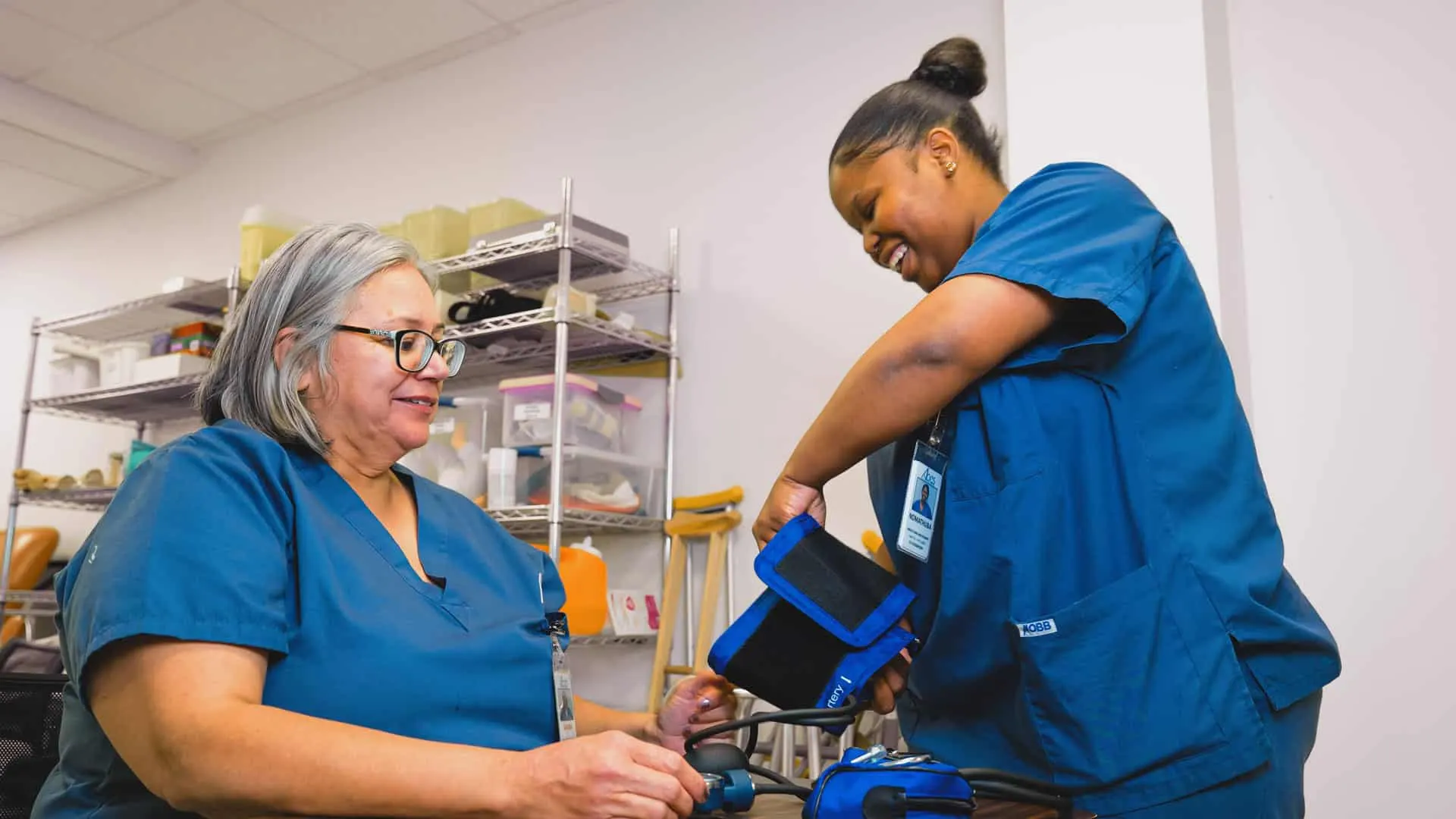
ABES College's Practical Nursing Diploma program is designed to equip students with the knowledge, skills, and hands-on experience necessary to excel in the Canadian healthcare system as Licensed Practical Nurses. Through a blend of classroom theory, on-site clinical practice, and high-quality simulation, students will have extensive opportunities to develop the needed competencies to provide exceptional patient-centered care.
What you'll learn
Term 1Nursing Foundations I, Health Assessment, Art of Nursing, Anatomy and Physiology, English and Interpersonal Communication
- Nursing Foundations I: Build clinical reasoning and hands-on skills to support daily living activities and basic medication administration.
- Health Assessment: Learn to assess patient health, interpret findings and communicate information to patients and the healthcare team.
- Art of Nursing: Develop compassionate, ethical care practices through therapeutic communication, cultural humility and evidence-based decision-making.
- Anatomy and Physiology: Understand how body systems function together and how they contribute to overall health.
- English and Interpersonal Communication: Strengthen academic writing, conflict resolution and communication skills for professional and therapeutic relationships.
Term 2Nursing Foundations II, Pathophysiology & Pharmacology I, Older Adult Health, Human Growth and Development
- Nursing Foundations II: Develop skills for more complex nursing interventions and safe medication administration, supported by patient-centred care planning.
- Pathophysiology & Pharmacology I: Connect common disease processes with medication treatments, including their uses, effects and potential risks.
- Older Adult Health: Plan compassionate care that supports older adults' safety, independence and mental well-being, including end-of-life care.
- Human Growth and Development: Understand development across the lifespan and how social conditions, culture and diversity influence health.
Term 3Nursing Foundations III, Pathophysiology & Pharmacology II, Mental Health and Addiction, Clinical I
- Nursing Foundations III: Prepare for complex patient care through advanced practical skills, medication administration, documentation and patient teaching.
- Pathophysiology & Pharmacology II: Expand your understanding of disease processes across body systems and the medications used to treat them.
- Mental Health and Addiction: Build assessment and therapeutic communication skills to support people experiencing mental health and addiction challenges.
- Clinical I: Apply classroom and lab learning in an instructor-led long-term care placement, providing safe, ethical and patient-centred care.
Term 4Community Nursing, Maternal and Child Health, Leadership in Health, Clinical II
- Community Nursing: Assess community health needs and identify resources and strategies that promote wellness and prevent disease.
- Maternal and Child Health: Develop assessment and care skills for pregnancy, childbirth, postpartum recovery, newborns and children through adolescence.
- Leadership in Health: Strengthen leadership, teamwork, advocacy and decision-making skills to support patients and improve care.
- Clinical II: Care for patients with more complex needs in an instructor-led medical or transitional care placement, working alongside the healthcare team.
Term 5Clinical III, Clinical Preceptorship, Transition to Professional Nursing Practice
- Clinical III: Consolidate nursing knowledge and skills in an instructor-led acute care placement, delivering safe, collaborative and patient-centred care.
- Clinical Preceptorship: Develop entry-level practical nursing skills under professional guidance while strengthening leadership, delegation and teamwork.
- Transition to Professional Nursing Practice: Prepare for professional practice by examining healthcare trends and developing skills in delegation, reflection, conflict resolution and lifelong learning.
Admission requirements
Standard admission
Alberta High School diploma, verified by transcript, or non-Alberta equivalent including:
- English 30-1 with a minimum final mark of 60% or English 30-2 with a final mark of 70% or equivalent
- Math 20-1 with a passing final grade or Math 20-2 with a minimum final mark of 60% or equivalent
- Biology 30 with a minimum final mark of 60% or equivalent
Academic assessment
Students who do not meet the academic requirements listed under standard admission can apply through academic assessment and must:
- be out of high school for at least 2 years
- be at least 19 years of age
- successfully meet the entry levels on ABES' Accuplacer assessment test or equivalent
All applicants
- Police Information Check, including vulnerable sector
- interview with program staff to ensure the applicant is suitable for the profession
- CLBA of 8 in all skill areas or equivalent as laid out in ABES English Language Proficiency Requirements for PN
Where this program leads in Alberta
- Alberta wages
- $27–$42hourly range$31.91average hourly$51,571average annualSource: Government of Alberta ALIS 2023 Alberta Wage & Salary Survey
Who hires in Calgary
- Alberta Health Services (the largest employer)
- Covenant Health
- Carewest
- AgeCare
- Bethany Care Society
- Extendicare
- Revera
- Home-care agencies (Bayshore, CBI Health)
- Medical clinics
- Hospitals
- Healthcare centres
- Long-term care facilities
Day to day tasks
- Administering medications and injections
- Monitoring vital signs and symptoms
- Assisting in wound care and dressing changes
- Supporting patients with activities of daily living
- Educating patients and their families on health management
- Participating in patient care planning and assessment
Where this credential takes you
What training here actually looks like
Graduate stories
“Great institution for anyone planning for a medical profession like nursing.”
“God will continue to bless the brains behind this wonderful college.”
“My instructor remembered my kids' names. That's the kind of place this is.”
ABES vs Bow Valley College
| What you are comparing | ABES College | Bow Valley College |
|---|---|---|
| Program length | 5 terms in 80 weeks | 5 termsSource: Bow Valley College: Practical Nurse Diploma program page (2026) |
| Upcoming start dates | Jun 30, 2027 | September 2026, January 2027, May 2027Source: Bow Valley College: Practical Nurse Diploma program page (2026) |
| Average class size | 25 | not published |
| Application fee | $0 | $90 CADSource: Bow Valley College: Tuition & Fees page (2026) |
| Preparation for the licensing exam | 1 week (40 hours) | not published |
One clear price. Real ways to pay it.
$46,000
Plus approximately $1,500 for books.
Ask admissions about bursaries and payment plansLicensing & accreditation
- College of Licensed Practical Nurses of Alberta (CLPNA)Approved Practical Nurse education programVerify with College of Licensed Practical Nurses of Alberta (CLPNA)
- Alberta Advanced EducationLicensed private vocational school under the Private Vocational Training Act (Alberta)
- Years operating35 years of career training in Calgary — established 1991
Frequently asked questions
Is the ABES Practical Nursing program approved?
Yes. Our Practical Nursing diploma is approved by the College of Licensed Practical Nurses of Alberta (CLPNA). CLPNA approves and continuously reviews every practical nurse program in the province.
How do I become a licensed LPN after I graduate?
After you finish the diploma you write the Canadian Practical Nurse Registration Examination (CPNRE) through CLPNA. Once you pass, you are registered and can practise as a Licensed Practical Nurse in Alberta.
Where do Licensed Practical Nurses work?
Licensed Practical Nurses work in hospitals, healthcare centres, home care, long-term care facilities, and health clinics. You can practise in Alberta once you pass the CPNRE and register with CLPNA.
Will I find work after I graduate?
ABES's first cohort in this program is still in training, so we do not have a graduate employment rate to quote yet. On the wider Alberta picture: HOT — ALIS’s highest demand tier; about 9,800 employed. A candidate-favourable market: 44% of employers report hiring difficulty, and boomer retirements keep demand high.
How do I advance after I graduate?
With experience alone: Advance up the 8-step AHS grid (~$32 → ~$42/hr) with experience. CLPNA additional authorizations — OR/perioperative, dialysis, IV therapy, immunization, advanced foot care — pay up to ~$55/hr. Charge-nurse / team-lead / coordinator roles. Ceiling ~$42–$55/hr (~$85k–$110k full-time in top specialties). With further study: LPN → Registered Nurse (RN): Bachelor of Nursing (LPN-to-BN bridging available) → ~$47.38/hr (~$73,823/yr). RN → Nurse Practitioner (NP): master’s degree → ~$58.51/hr (~$105,895/yr).
Articles about Practical Nursing
How to Prepare for the Canadian Practical Nurse Registration Examination (CPNRE) & What to Expect in Alberta
RN vs LPN in Alberta: Differences in Education, Scope & Career Path
How to Become a Licensed Practical Nurse in Alberta: Diploma, Requirements, FAQs & More
Planning your studies
See all articles- How to Seamlessly Bridge the Gap from Health Care Education to Employment
- 6 Financial Assistance Options for ABES Students that Make Education Accessible
- Your Educational Journey at ABES College: Complete Guide to Admissions, Program Options & Student Life
- Career Colleges vs Traditional Universities in Alberta: What’s Right for You?